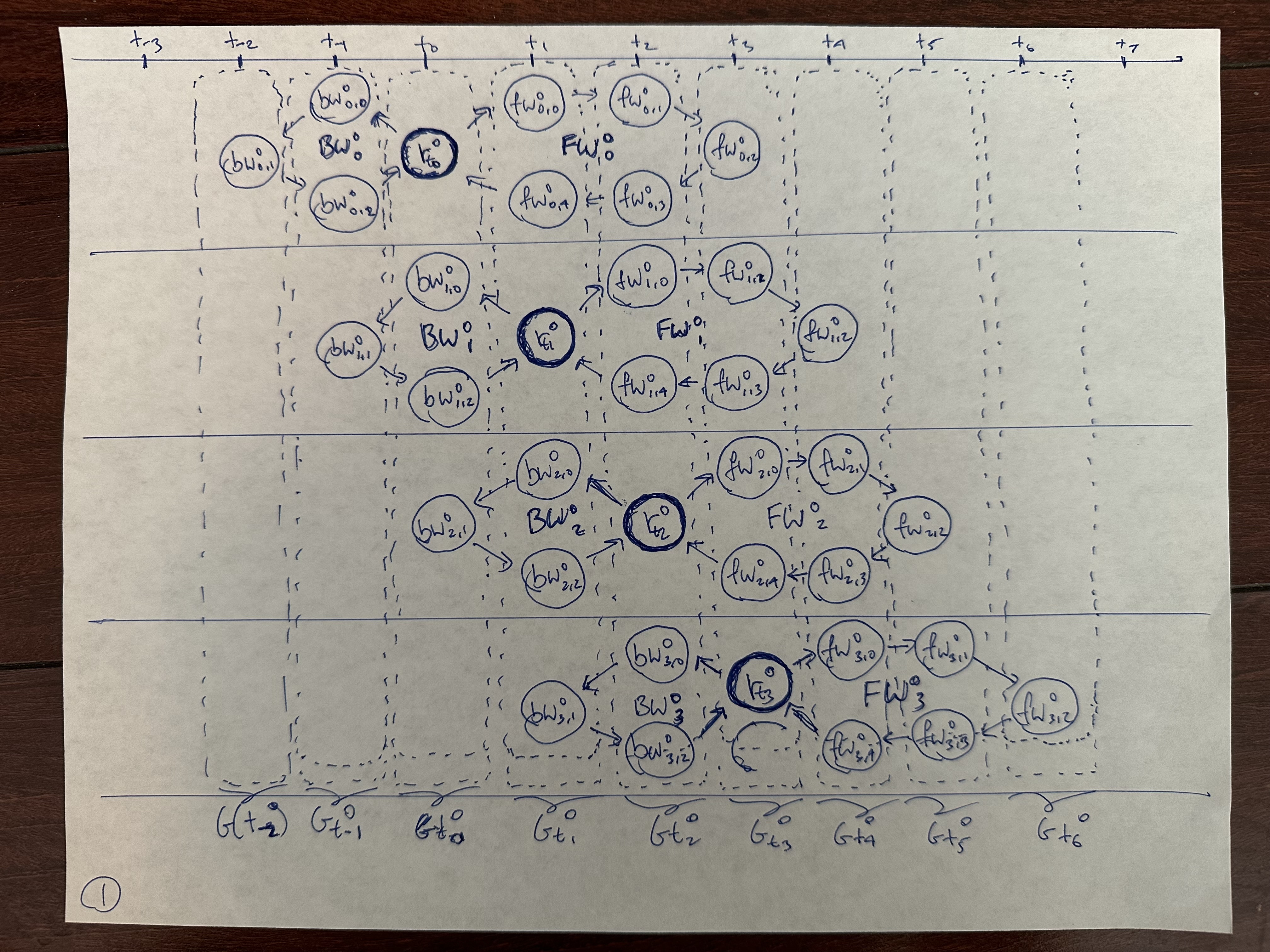
A multi-dimensionally reductive computational architecture


Comments

Popular posts from this blog

Guitar improvisation from May 23, 2025

Artificial Intelligence, Economics, Sustainability, and Irreversibility

Imagine you are trying to build a city. You need to build the system that allows the city to evolve, whether that is by a planning committee or a guild of engineers. Whichever approach you take to create a system that scales, you will need intelligent people. Intelligence is one of the bottlenecks in starting a new city. You want intelligent people to manage your water and sewage systems. You want intelligent people to measure and combat pollution. You want intelligent people to maintain a political or legal system that is fair. You want intelligent people to maintain a system that can protect itself. This is why people want to move to good neighborhoods. Good neighborhoods are a heuristic that the governing system is competently working in most of these domains. Everything feeds on itself. A low pollution level in water leads to better health outcomes, which can potentially lead to more intelligent citizens (even from the moment they are born). A fair justice system leads to well-beha...

Time, partitioning, and synchronization

Any time measuring method inevitably runs into the issues of partitioning and synchronization. Partitioning deals with the issue of dividing a larger measure into smaller measures, and combining smaller measures into a larger measure. Synchronization deals with the problem of how a set of devices can self-correct if some of them are corrupted. The two are fundamentally related because often a choice in one determines a choice in the other. A measure is often defined by a set of synchronization points, such as the radioactive decay of an element or the frequency of a crystal oscillator. Synchronization points can often be defined as a measure of a change in space, such as the revolution of a planet around a star, or the change in energy state of an oscillating structure. Fundamental to both is the notion of change. A synchronization event can only be defined if there is a unit of space in which a change is observed. And either the magnitude of the space is large (such as the movement of...